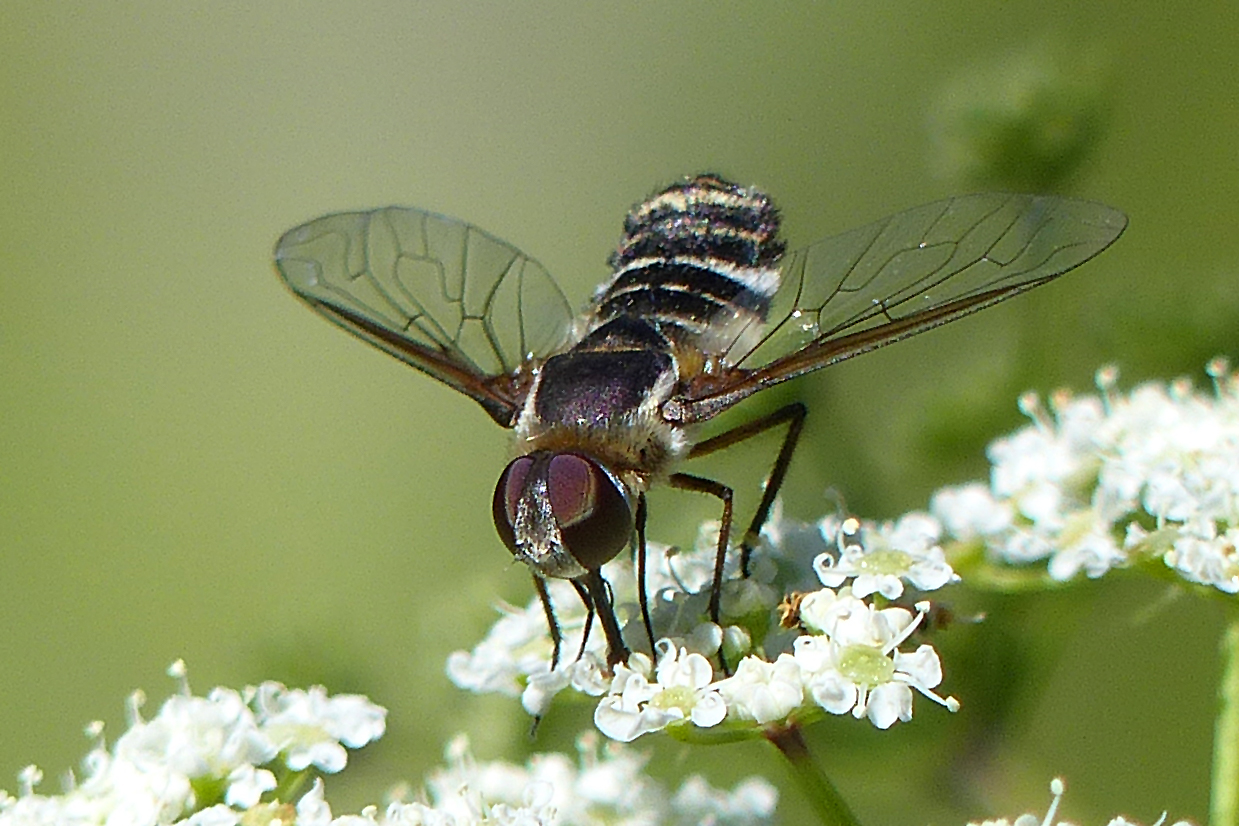
Bee Fly, Lisa Culp, August 2015
At the three Somme preserves, we have the privilege and fun of being part of experimenting for and contributing to the early decades of something new to the planet – the restoration of health to natural ecosystems.
The very concept of the ecosystem was conceived in the early 1900s by University of Chicago biologist Henry Chandler Cowles and colleagues. But learning how to restore the plants and animals of vanishing prairies to the soil of former corn fields had to wait until the 1940s, when it was pioneered at the University of Wisconsin by Aldo Leopold and others. A major discovery was that the typical Midwestern ecosystem could not survive without occasional fire. Restoring health to damaged savannas and woodlands didn’t come into its own until the 1980s, when Somme Prairie Grove and other Chicago areas sites saw some of the early successful attempts.
At the Somme preserves, there are more than 500 plant species, mostly rare today, supporting an estimated 5,000 animals species. Many of the animals are very small – from salamanders and shrews to beetles, walking sticks, springtails, and froghoppers. Both plants and animals depend on more hundreds of species of fungi, algae, protozoa, and bacteria. It is our honor and pleasure to work to preserve the delicate, natural balance of these precious ecosystems.
 Your Guide to the Somme Preserves